Grip and Tactility
Friction is control. Why synthetic suede rules the million-dollar cockpit.
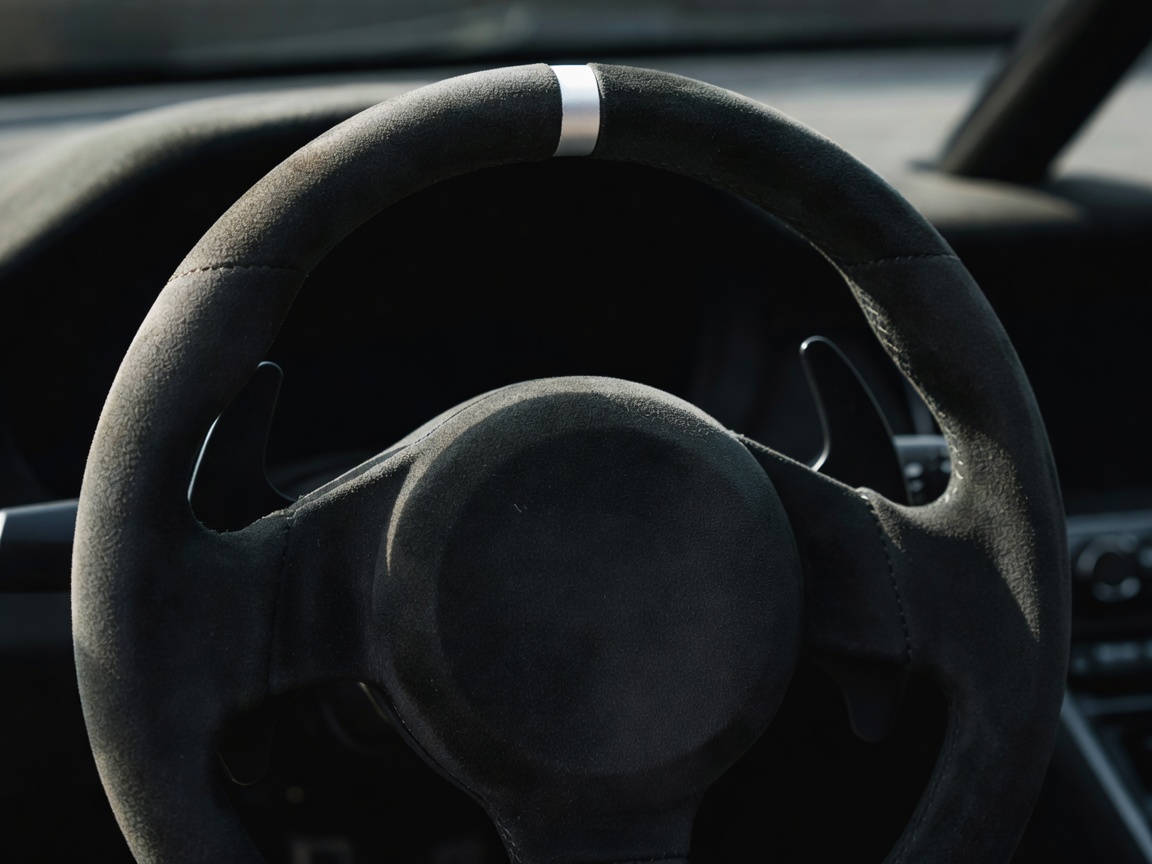
Leather has historically been the signifier of automotive luxury, but in the realm of hypercars, it is heavy, slippery, and reflective. The modern standard is Alcantara—a microfiber synthetic material developed in the 1970s and produced exclusively in Milan, Italy.
The Coefficient of Friction
At 300km/h, steering input must be absolute. The primary advantage of Alcantara on steering wheels and shift knobs is its incredibly high coefficient of friction, especially when paired with Nomex racing gloves. Unlike leather, which becomes slick under the duress of sweat, Alcantara maintains its abrasive grip profile.
Glare Reduction and Weight
Beyond tactility, Alcantara is highly utilized on hypercar dashboards due to its matte, non-reflective properties. A glaring reflection on the windshield can be disastrous at high speeds; Alcantara absorbs light perfectly. Furthermore, it is up to 50% lighter than traditional leather applications, a critical metric when engineers are stripping grams from the curb weight.
-
Flame Retardancy
Specialized motorsport grades of Alcantara are treated to meet rigorous FIA flammability standards, offering vital milliseconds of protection in the event of an anomaly.
-
Acoustic Dampening
In a stripped-out carbon tub, NVH (Noise, Vibration, and Harshness) can be deafening. Alcantara roof liners and side panels help absorb high-frequency gear whine and exhaust resonance.