G-Force Management
Seats engineered not for comfort, but for the violent physics of cornering.
When a hypercar pulls in excess of 1.5G laterally, the human body becomes a pendulum. Standard automotive seating fails completely under these loads. The solution lies in rigid, form-fitting architecture designed by specialists like Sparco and Recaro.
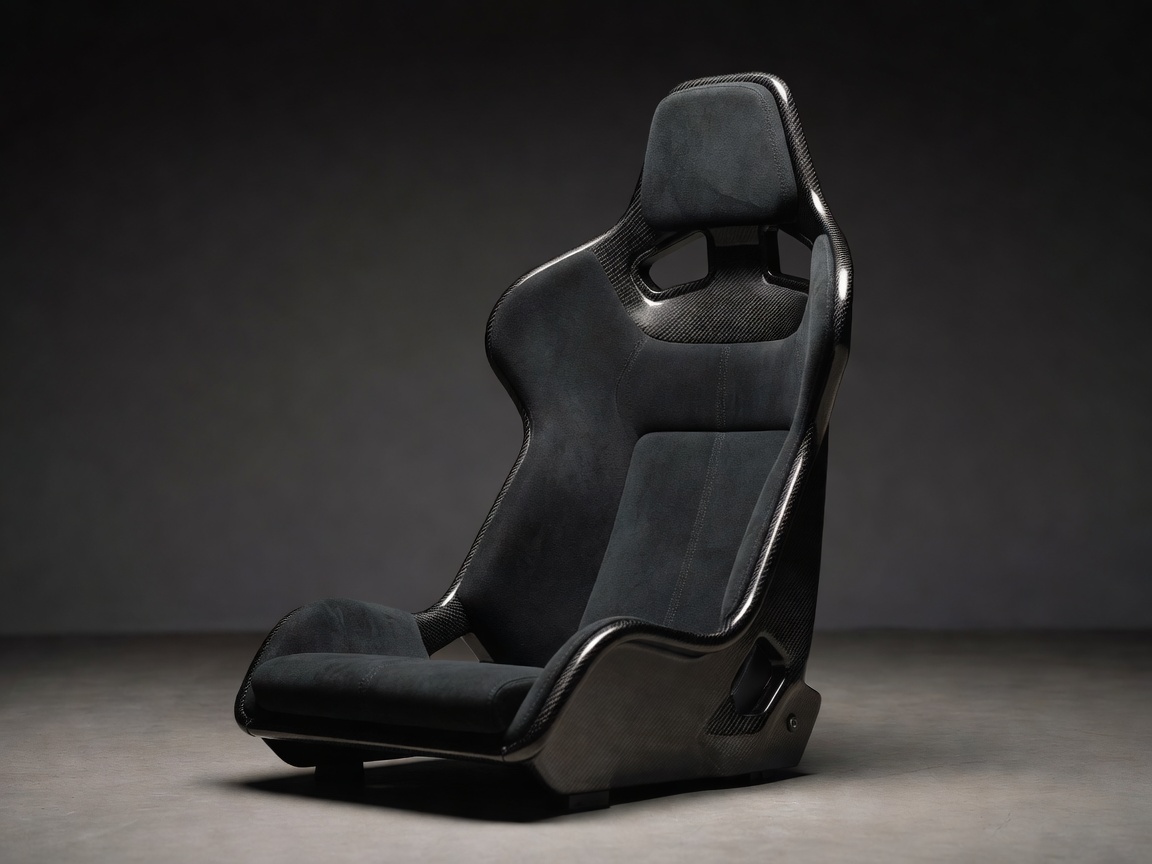
Fixed-Back Carbon Buckets
To eliminate mechanical flex and save weight, the recline mechanism is entirely discarded. Fixed-back carbon fiber bucket seats pitch the driver at a permanent, aggressive angle optimized for pedal box interaction and steering leverage. The shell is formed from the same T1000G carbon as the chassis, essentially hard-mounting the driver's spine to the car's dynamic center.
Multipoint Harness Integration
Traditional 3-point seatbelts cannot secure a body against extreme deceleration. Hypercar seats feature integrated pass-throughs for 5- or 6-point FIA-approved racing harnesses. These secure the pelvis and clavicles, anchoring the driver to the rear roll structure and allowing the HANS (Head and Neck Support) device to function properly on track days.
3D-Printed Custom Padding
Because the carbon shell cannot be adjusted, ergonomics are managed through modular padding. Leading manufacturers now utilize 3D-printed elastomeric lattices that map precisely to the owner's biometric profile, providing targeted pressure relief while remaining dense enough to transmit chassis feedback.
-
Integrated Tubs
In extreme examples like the Aston Martin Valkyrie, the seat is not a separate component. Padding is applied directly to depressions molded into the carbon tub itself, positioning the driver in a "feet-up" Formula 1 posture to optimize under-floor aerodynamics.